
British Columbia does not require a government license to work as an esthetician. In 2003, the province deregulated the personal services industry, so there’s no mandatory provincial exam or licensing body the way there is for a nurse or an electrician — a status confirmed by the Government of Canada’s own Job Bank listing for the occupation in BC. That surprises a lot of people, since most other provinces work differently. But it doesn’t mean training doesn’t matter. It just means the standard comes from employers and clients instead of the government.
No license, but a real industry standard
Without a licensing body, it’s technically possible to call yourself an esthetician with no training at all. In practice, almost no one hires that way. Spas, clinics, and salons consistently ask for graduation from a recognized esthetics program, because it’s their main way of knowing someone can perform treatments safely and competently. In BC, the credential that actually matters is a diploma from a program employers trust, not a government license.
What employers are really screening for
When a hiring manager looks at an esthetics graduate, they’re checking for a few concrete things: hands-on hours (not just theory), real client experience before graduation, and breadth: can this person handle skin, body, and nail services, or only one of the three. A program that’s mostly lecture-based, with little practical client time, tends to produce graduates who need significant retraining on the job.
Health and safety rules still apply
Deregulated doesn’t mean unregulated everywhere. Personal service establishments in BC still fall under provincial health guidelines around sanitation, infection control, and safe equipment use, and municipalities require business licenses to operate. None of that is a personal credential, but it does mean the industry isn’t a free-for-all. There’s still a baseline any legitimate spa or salon has to meet.
Some specialties raise the bar
Certain advanced services, like laser hair removal, some injectables-adjacent treatments, or medical-grade peels, come with their own manufacturer certifications or, in some cases, require working under a medical professional. A general esthetics diploma gets you into the field; some specialties layer additional, narrower training on top of it later.
Voluntary designations exist too
Organizations like the BeautyCouncil offer voluntary certification exams (such as Certified Cosmetology Professional status) that some estheticians pursue to signal a level of competency to clients and employers, even though nothing requires it. It’s not a substitute for training, but it’s one more way the industry self-regulates in the absence of a government license.
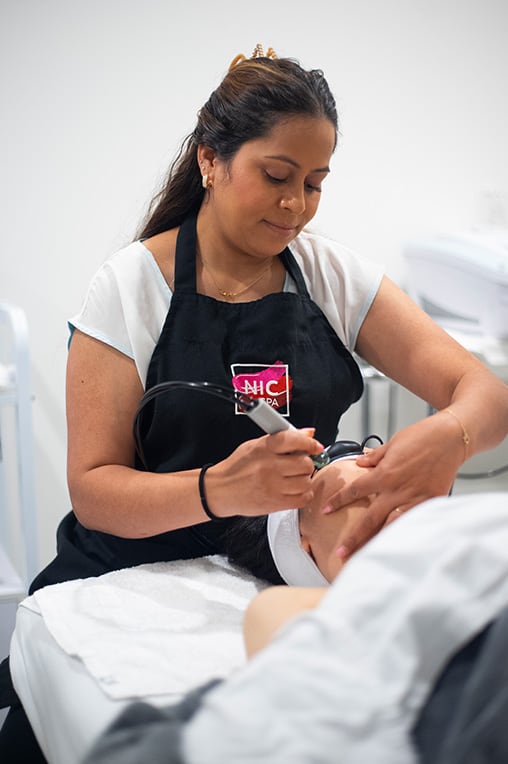
This is a general look at how licensing actually works in BC. The practical takeaway is that the training itself is what carries the weight, not a government credential most people assume exists. At NIC, our Esthetics program covers nails, skin, and body across 987 hours, with real client experience at NIC Spa built into every module. Find out more →