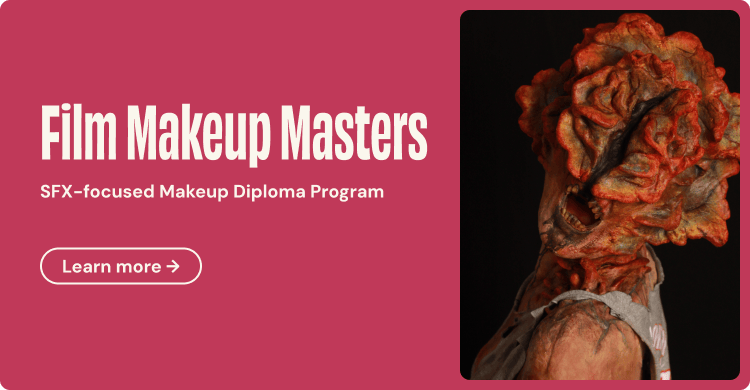

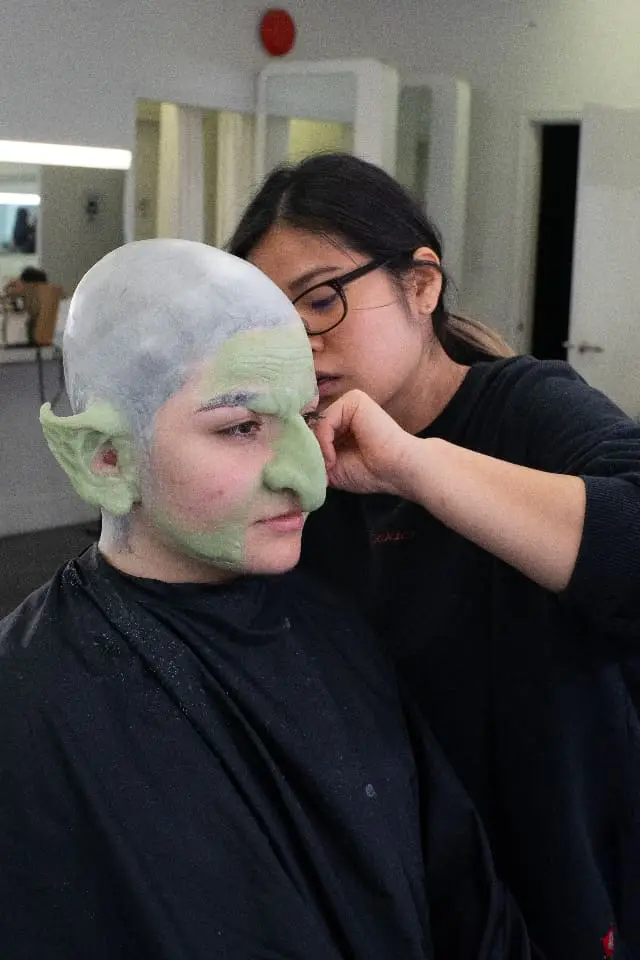
SFX prosthetics are custom-made appliances, like scars, bruises, aging effects, or full creature designs, worn by an actor to physically alter how they appear on camera. They’re built from materials like foam latex, silicone, or gelatin and applied directly to the skin, often designed to survive a full shoot day across multiple takes.
What prosthetics actually do
A prosthetic changes an actor’s appearance beyond what makeup alone can achieve. That can be small, like a single scar or wound, or it can be a full character transformation involving aging, injury, or a creature design covering most of the face and body. Either way, it has to hold up physically through hours of filming, not just look right in one photo.
How a prosthetic actually gets made
The process starts with a life cast, capturing the exact shape of the actor’s face or body part. That cast becomes the base for sculpting the design in clay. A mold is then made from the sculpture, and the final material gets run into that mold to produce the actual appliance the actor wears on set.


What they’re made from
Foam latex is lightweight and moves naturally with an actor’s face, though it takes longer to produce. Silicone gives the most realistic skin texture and can be reused across multiple shoot days, at a higher cost. Gelatin is cheaper and faster to make, but it’s generally single-use and more fragile under heat.
How they get applied on set
A prosthetic is adhered with medical-grade adhesive, then the edges are blended into the actor’s real skin with makeup so the seam disappears. It’s painted to match skin tone and lighting conditions, and productions doing serious prosthetic work usually keep a dedicated makeup artist on set specifically to maintain continuity across takes and days.
Where SFX prosthetics actually show up
Prosthetic work isn’t only for monster movies. Aging effects, injury makeup, and subtle skin texture work show up constantly in everyday film and TV, often without an audience ever clocking that it’s prosthetic work at all.


Why it’s treated as its own specialty
Prosthetic work draws on sculpting, mold-making, and materials knowledge that has more in common with special effects fabrication than with traditional beauty makeup. That’s why it’s usually taught as a separate, deeper track rather than folded into general makeup training.
This is a broad look at what prosthetic work involves; the material and technique used depend heavily on the specific effect and production. At NIC, our Film Makeup Masters program puts 600 of its 1,000 training hours specifically into Prosthetic Arts. Find out more →