

Acrylic and gel are both nail enhancements, but they’re built from different materials and behave differently in strength, look, and application. Acrylic is a powder-and-liquid system that hardens in the air. Gel is a pre-mixed formula that only hardens under UV or LED light.
How each one is actually applied
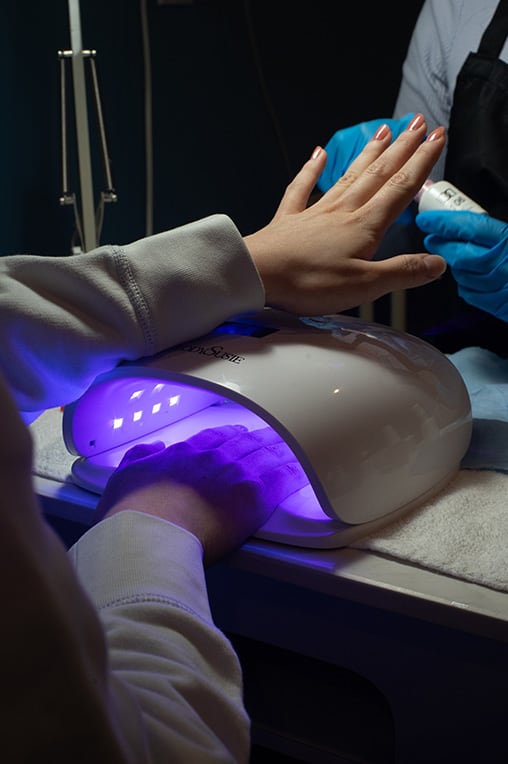
With acrylic, a technician dips a brush into liquid monomer, picks up powder polymer, and works fast: the mixture starts hardening the moment it hits air, so there’s a narrow window to shape it before it sets. Gel is applied more like polish, in layers, with each layer cured under a UV or LED lamp before the next one goes on. There’s no race against a hardening clock.
Strength and durability
Acrylic generally holds up better under heavy daily use and is the usual choice for extreme length or structural nail repair, since it’s harder and more rigid. Gel is more flexible, which can mean better resistance to sudden cracking, but it can also wear down or lift sooner under repeated bending and everyday hand use.
Look and feel
Gel tends to look more natural and glossy, and feels lighter on the nail, closer to a real nail plate. Acrylic can feel and look thicker unless it’s applied by a skilled hand, though it takes shaping and colour extremely well.
Removal
Neither should ever be picked off. Acrylic is dissolved with a slow, proper acetone soak. Gel needs the same acetone approach, though soft gel dissolves fully while hard gel (like builder gel) usually needs to be filed down first before it will soak off.
Smell and salon experience
Acrylic has a distinct chemical smell during application, from the liquid monomer, and needs a well-ventilated station. Gel has little to no odour, since there’s no liquid mixing involved, just layers curing under light.
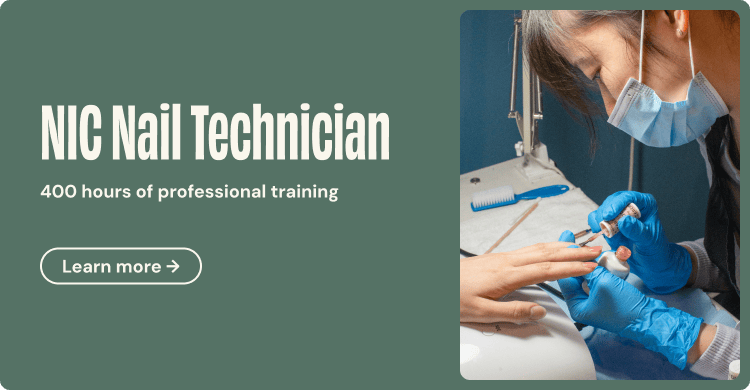
This is a general comparison. Most clients don’t have a strong preference between the two until they’ve actually tried both, and a lot of it comes down to lifestyle and how hard someone is on their hands. At NIC, our Nail Technician program covers both systems directly, along with PolyGel and Gel-X, so graduates can offer whatever a client actually wants. Find out more →