

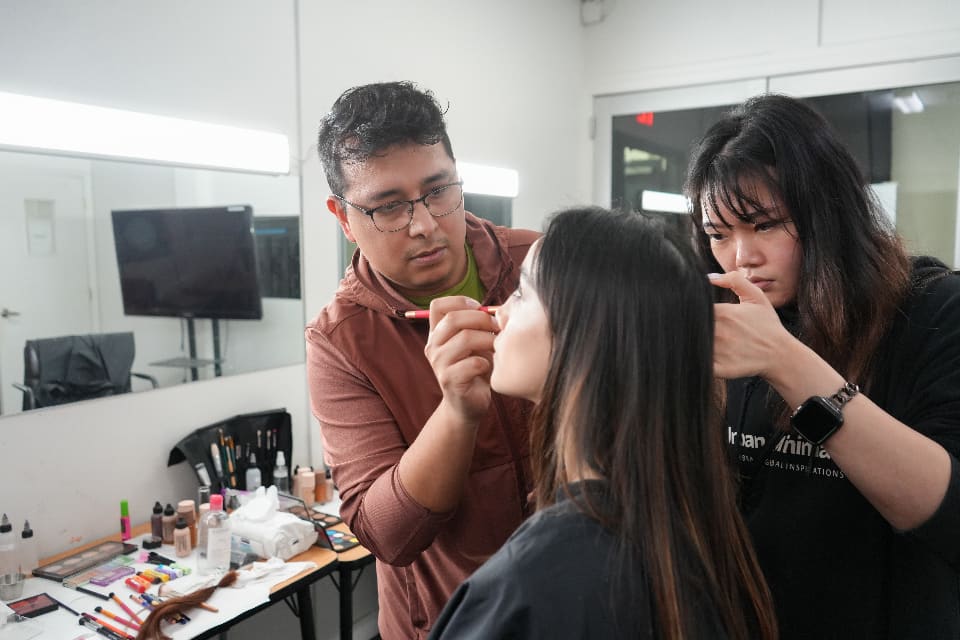
Becoming a film and TV makeup artist means combining beauty technique with effects work, building a portfolio through real productions, and learning how a set actually runs. It takes more than knowing how to apply makeup well. Most working artists get there through some mix of formal training and early on-set experience, in either order.
Start with technique, not just products
Film and TV makeup starts from the same foundation as any other kind: skin prep, colour theory, corrective work, product knowledge. The difference is what it’s for. A film makeup artist has to think about how a look reads under specific lighting, how it holds up across a 12-hour shoot day, and how to match it exactly across multiple takes and shooting days using a continuity binder. That’s a different skill than doing someone’s makeup for a night out, even when the products are the same.
Learn effects, not only enhancement
Film work regularly asks for things beauty training doesn’t cover: bruises, cuts, aging, bald caps, blood. Deeper into effects work is prosthetics: lifecasting, sculpting, molding, running silicone or gelatin appliances, building a full character out of foam latex. Not every film makeup artist specializes in prosthetics, but knowing the basics of special effects makeup opens up far more of the job than beauty technique alone.


Build a portfolio that proves it
Casting a makeup artist is a trust decision. A production is handing someone their actor’s face for weeks at a time. A portfolio and a body of real, photographed work carries far more weight than a list of skills. This is why formal programs build in actual productions: short films, theatre productions, real photoshoots. Those become the first pieces in a portfolio that would otherwise take years to assemble freelancing alone.
Understand how a set actually runs
On-set makeup work has its own etiquette: reading a call sheet, showing up for prep before anyone else, working around a tight schedule, taking direction from a director or DP without ego. None of that is difficult to learn, but it’s very hard to fake on day one, and it’s often what separates someone who gets asked back from someone who doesn’t. Professionalism and commitment are naturally expected.


Know the path into the union
In BC, working makeup artists in film and TV are often members of IATSE Local 891. Getting there usually means logging enough production days and building the right connections, and it helps enormously to understand the pathway early rather than figuring it out after graduating. It’s also worth knowing that a produced short film with a real call sheet can sometimes be used as part of that application.
Expect to keep learning after school
The field moves. New prosthetic materials, new techniques, new expectations from productions using more visual effects alongside practical ones. The artists who stay working tend to be the ones who keep training years after they’ve already broken in.
This is a broad look at the path. How deep any of these steps go depends on the program and the person. At NIC, our Film Makeup Masters program puts 720 of its 1,000 hours into special effects, including 600 hours dedicated specifically to Prosthetic Arts, and finishes with a produced short film that carries an official IMDb credit. Find out more →